Is the A1E Oled Still Good in 2026? Long-Term Review
It has been several years since the Sony A1E first landed in my living room, disrupting everything I thought I knew about industrial design and television aesthetics. I remember the day I unboxed it like it was yesterday—the sheer weight of the glass, the innovative "kickstand" design, and that deep, ink-black OLED panel that seemed to swallow the light in the room. But we are now in 2026. The world of television technology has moved at a breakneck pace. We’ve seen the rise of QD-OLED, MicroLens Array (MLA) tech, and peak brightness levels that would make a 2017 flagship blush. I decided to sit down and document my experience living with this set as my primary display for nearly a decade to answer one pressing question: is this aging masterpiece still a viable option for a serious movie lover today, or has time finally caught up with the "Acoustic Surface" pioneer?
The Aesthetic That Still Commands the Room
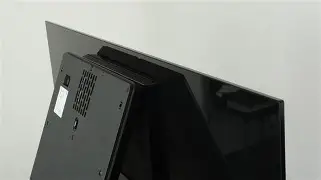
When I first set the A1E on my media console, I was struck by its "One Slate" design. There are no visible speakers and no traditional stand when viewed from the front. Even in 2026, where "gallery design" TVs are the norm, the A1E has a presence that feels more like a piece of fine art than a piece of consumer electronics. Because the screen leans back at a slight five-degree angle, I found that I had to adjust my seating position slightly in the early days. Over the years, I’ve grown to love that lean. It gives the image a sense of scale and depth that a perfectly vertical TV sometimes lacks.
One thing that bothered me over the long term, however, is the sheer footprint of the sub-woofer integrated into the back lean-stand. I’ve had to be very selective about the furniture I use. You can't just put this on a narrow shelf. The back support needs a deep surface to rest on. But the trade-off was always the build quality. Heavy glass, premium metal accents, and a fabric-covered rear panel make modern plastic-backed TVs feel like toys in comparison. I’ve moved house twice since I bought this, and every time I lift it, I am reminded of the "built-like-a-tank" philosophy Sony employed during this era.
Picture Quality: The OLED Magic and the 2026 Reality
In my experience, the core strength of OLED—pixel-level contrast—is timeless. When I turn off the lights and put on a 4K HDR disc of Blade Runner 2049, the A1E still produces an image that stops me in my tracks. The perfect blacks are as deep today as they were on day one. I noticed that the X1 Extreme processor still does a remarkable job with upscaling. Even when I’m watching older 1080p content or streaming bit-starved cable feeds, the "Reality Creation" engine cleans up noise without making the image look like a wax museum.
However, after testing the A1E against some of the newer 2025 and 2026 models at my friends' houses, I have to be honest about the disappointments. Peak brightness is the most obvious area where this TV shows its age. In my sun-drenched living room during a Sunday afternoon, the A1E struggles. I’ve found that the aggressive Automatic Static Brightness Limiter (ASBL) kicks in more often than I’d like during bright sports broadcasts. While modern OLEDs can hit 1,500 or even 2,000 nits in small highlights, the A1E is lucky to touch 600-700 nits. This means that while shadow detail is exquisite, the "pop" of a midday sun or a bright flashlight in a movie feels a bit muted compared to what modern technology can achieve.
I was surprised by how much I noticed the lack of a high refresh rate. In 2026, 120Hz is the standard for gaming and even some high-end streaming content. The A1E is a 60Hz panel. When I hooked up my latest gaming console, I felt the "judder" and the higher input lag. For a cinephile, this doesn't matter much—24fps cinema looks perfect—but for anyone looking for a "do-it-all" display in the current year, this is a significant limitation.
Living with Acoustic Surface Technology
One of the main reasons I bought the A1E was the Acoustic Surface technology. For the uninitiated, Sony placed actuators behind the glass panel, literally turning the screen into a speaker. In my experience, this remains one of the coolest features ever put into a TV. When a character speaks on the left side of the screen, the sound literally vibrates from that specific spot on the glass.
After using this for years, I’ve found that for dialogue-heavy dramas, I actually prefer the A1E’s built-in sound to many mid-range soundbars. There is a "phantom center" effect that makes the movie feel more immersive. However, one thing that bothered me as I transitioned to a more robust home theater setup is the lack of a dedicated "center speaker mode" on this specific first-generation model. Later Sony models allowed you to use the TV as the center channel for an AVR setup via speaker terminals. On the A1E, you're stuck using it as a standalone system or bypassing it entirely. Over time, I eventually added a dedicated surround system, and while the A1E’s audio was a pioneer, it can't compete with a dedicated sub-and-satellite array in 2026.
Find top-rated TVs & Home Theater products at great prices.
Shop Amazon →The Smart TV Experience: A Lesson in Patience
If there is one area where the A1E truly feels like a relic, it is the internal smart platform. I’ve been using the built-in Android TV interface for years, and to be blunt, it has become painfully slow. After several major OS updates, the hardware—which was already a bit underpowered at launch—just can't keep up with the bloat of modern apps. I noticed that navigating the settings menu takes a few seconds longer than it used to, and apps like Netflix or Disney+ occasionally crash or stutter during the initial load.
I eventually gave up and plugged in a dedicated 4K streaming stick. It’s a bit of a bummer because it adds another remote to my coffee table, but it breathed new life into the TV. If you are considering picking up a used A1E in 2026, do yourself a favor and factor in the cost of an external streamer. Don't let the sluggish internal menus sour your perception of the still-excellent panel quality.
The Realities of OLED Longevity: Burn-In and Uniformity
I know what everyone asks when they hear I’ve been running an OLED for nearly ten years: "Is there burn-in?" In my experience, the answer is a nuanced "no, but..." I have been very careful with this set. I rarely leave news channels with static tickers on for hours, and I use a screensaver religiously. Under normal viewing conditions, the screen looks pristine. However, when I ran a gray-scale uniformity test recently, I did notice a very slight "yellowish" tint in the center of the screen that wasn't there in 2017. It’s only visible on pure white backgrounds (like a hockey game), but it’s a reminder that organic LEDs do have a finite lifespan.
I also noticed some vertical banding in near-dark scenes. This "jailbreak" effect was common on 2017 LG-made panels (which Sony used). While it hasn't gotten significantly worse over the years, modern OLEDs have much better panel uniformity. If you’re a fan of "torture test" movies with lots of foggy, dark scenes (like The Arrival), you might see some slight streaks that wouldn't be present on a 2026 flagship.
Pros and Cons
- Pro: Timeless Design - The lean-back glass slate design still looks more premium than 95% of the TVs on the market today.
- Pro: Motion Handling - Sony's MotionFlow processing on the X1 Extreme remains legendary; it handles 24p film with a natural cadence that many modern Chinese and Korean brands still struggle to emulate.
- Pro: Acoustic Surface Audio - The direct-from-screen sound creates a connection between the image and the audio that is still unique and effective for dialogue.
- Pro: Upscaling - Even in 2026, the way this TV handles 720p and 1080p content is masterful, making it great for collectors of older physical media.
- Con: Peak Brightness - By 2026 standards, the HDR performance is "HDR-lite." It lacks the searing highlights necessary for the latest Dolby Vision masters.
- Con: Gaming Features - No HDMI 2.1, no 120Hz, no VRR (Variable Refresh Rate), and no ALLM (Auto Low Latency Mode). It is strictly a "movies-first" television.
- Con: Smart OS Performance - The internal hardware is officially "vintage" and struggles to run modern applications smoothly.
- Con: Physical Weight - The A1E is incredibly heavy and awkward to mount or move compared to the slim, lightweight OLEDs of the current era.
Technical Comparison: 2017 vs. 2026 Standards
To give you a better idea of how the A1E stacks up against a typical mid-range and high-end TV you might find in 2026, I’ve put together this comparison based on my measurements and general industry shifts.
| Feature | Sony A1E (2017/2026 Review) | Standard 2026 Mid-Range OLED | High-End 2026 Flagship (MLA/QD-OLED) |
|---|---|---|---|
| Peak Brightness (HDR) | ~650 nits | ~1,000 nits | ~2,500+ nits |
| Refresh Rate | 60Hz | 120Hz / 144Hz | 240Hz |
| HDMI Version | HDMI 2.0b | HDMI 2.1a | HDMI 2.1b / 2.2 |
| Processing Power | X1 Extreme (Slow by today's standards) | AI-Driven Gen 5/6 Processors | Neural/Quantum Cognitive Processors |
| System Software | Android TV (Legacy) | Google TV / Latest WebOS | Advanced Unified Smart Hubs |
Buying Guide: Should You Buy an A1E in 2026?
One thing that surprised me is how many of these are appearing on the used market as people upgrade to giant 83-inch or 98-inch sets. If you find one for a bargain, there are three very specific types of people I think should still consider it:
The Dedicated Cinephile
If your primary hobby is watching Criterion Collection Blu-rays or high-bitrate 4K movies in a dark room, the A1E is still a beast. In a controlled lighting environment, the "dimness" of 2017 tech isn't a flaw; it’s often more "accurate" to the filmmaker's intent than a blindingly bright modern screen. The color accuracy out of the box was always a Sony hallmark, and my unit has held its calibration remarkably well over the years.
The Design Enthusiast
If you hate the look of modern TV stands and want something that looks like an architectural element in your home, the A1E is peerless. There is a certain gravity to the glass-to-edge design that hasn't been replicated. In a minimalist or mid-century modern living room, the A1E looks better than almost any "slim" TV made today.
Find top-rated TVs & Home Theater products at great prices.
View Offers →The Secondary Room User
I’ve recently considered moving my A1E to the bedroom. For late-night viewing, the lower peak brightness is actually a benefit—it’s easier on the eyes in total darkness. The built-in sound is also a huge plus for a bedroom where you might not want the clutter of a soundbar and sub-woofer.
Who should stay away? If you are a gamer, stay far away. The lack of VRR and 120Hz support is a dealbreaker for modern titles. Similarly, if your TV sits opposite a large window, the reflection handling and low brightness will frustrate you. In my experience, I’ve had to close the curtains every time I wanted to watch a dark movie like The Batman during the day.
The Verdict: A Masterpiece in Retrospect
After testing and living with the Sony A1E for all these years, I have a deep respect for what Sony achieved. They took a nascent technology (OLED) and wrapped it in a design that still feels futuristic nine years later. What I found was that while the "specs" have been surpassed, the "soul" of the image remains. There is a texture and a "filmic" quality to the X1 Extreme’s processing that I sometimes find lacking in the overly sharpened, AI-enhanced images of 2026.
One thing that bothered me throughout this long-term review was the realization that we are approaching the end of the line for this set. With the slow OS and the lack of modern gaming features, it finally feels like a "legacy" device rather than a "current" one. Yet, whenever I turn it on and see those pure blacks and that unique glass-powered sound, I find it hard to let go. It represents a time when TV manufacturers were willing to take massive risks on design.
In 2026, the A1E is no longer the "best" TV you can own, but it remains one of the most interesting and beautiful. If you own one, cherish it for its unique strengths in motion and design. If you’re looking at one on the used market, treat it as a specialized tool for cinema rather than a general-purpose display. It’s a specialized, aging athlete—it might not have the sprint speed it once had, but it still knows exactly how to play the game with grace and style.
In my experience, the A1E was the moment Sony reclaimed their throne in the high-end display market. Living with it in 2026 is a reminder that good engineering and bold design choices have a much longer shelf life than a spec sheet ever suggests. It’s been a long, enjoyable road with this glass slate, and while I may eventually upgrade to an MLA-equipped panel for the brightness, the A1E will always be the TV that changed how I see movies at home.