Manfrotto One First Look: Unboxing and Impressions
The landscape of professional camera support is undergoing a significant shift as creators demand equipment that balances the heavy-duty reliability of studio gear with the agile portability required for modern location work. Manfrotto, a brand that has served as a cornerstone in the photographic industry for decades, has recently introduced the Manfrotto One. This system represents a strategic departure from their traditional segmented lineups, aiming to provide a singular, versatile solution for cinematographers and high-end still photographers alike. By merging the structural integrity of their video tripod series with the modular flexibility often seen in their photography-centric trekking models, they have crafted a tool designed to be the primary support system for a wide range of creative workflows.
For the professional who often finds themselves transitioning between tight interior architectural shoots and open-field documentary work, the promise of a "one-size-fits-all" support system is enticing. Usually, such versatility comes at the cost of stability or weight, but the Manfrotto One seeks to challenge that compromise. This first look explores the unboxing experience, the immediate tactile impressions of the hardware, and a deep dive into the engineering choices that define this new flagship offering in the camera support category.
The Unboxing Experience: First Physical Impressions
Upon receiving the Manfrotto One, the first notable aspect is the packaging itself. Eschewing the standard thin cardboard often found with entry-level tripods, the One arrives in a reinforced, high-density fiberboard box that suggests the premium nature of the contents within. Inside, the tripod is nestled within a custom-fitted ballistic nylon carrying case. This isn't a mere accessory but a fully integrated transport solution featuring weather-resistant zippers and internal padding that contours specifically to the leg locks and head assembly. It reflects a growing trend where manufacturers recognize that the gear's protection during transit is as important as its performance on the field.
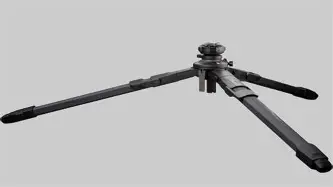
Lifting the Manfrotto One for the first time reveals the careful balance of materials. Utilizing a high-grade carbon fiber weave, the legs feel incredibly rigid yet surprisingly lightweight relative to their diameter. The carbon fiber pattern is tight and cross-woven, which is essential for minimizing micro-vibrations—a critical factor for long-exposure photographers and videographers using long focal lengths. The metal components are finished in a matte-black anodized coating, giving the unit a stealthy, professional aesthetic that avoids the glare of polished aluminum under studio lights.
The mechanical parts of the tripod, specifically the leg angle selectors and the locking mechanisms, have a distinct, tactile click. Unlike cheaper plastic alternatives, these components are machined from solid blocks of aluminum. This choice ensures that the tripod can withstand the rigors of extreme temperatures and heavy use without the risk of the locking pins snapping or becoming loose over time. The center column, a point of failure or instability in many designs, features a redesigned triangular profile that slots into the chassis with almost zero tolerance, effectively eliminating the rotational play that often plagues round columns.
Detailed Engineering and Product Analysis
The Manfrotto One is defined by its hybrid nature. To understand its value proposition, one must look at the three primary pillars of its design: the chassis, the leg architecture, and the head interface. The chassis, or the "spider" of the tripod, is the heart of the system. In the Manfrotto One, this area has been widened to provide a more stable base for the legs to hinge from. This increased width allows for a higher load capacity while maintaining a surprisingly low profile when the legs are fully splayed for low-angle shots. Integrated into the side of the chassis is an "Easy Link" 3/8-inch attachment point, allowing users to mount monitors, LED panels, or friction arms without needing separate clamps that could damage the carbon fiber tubes.
The leg architecture utilizes a G-Lock Ultra system. This version of the twist-lock mechanism has been optimized for speed and debris resistance. A quarter-turn is all that is required to unlock the sections, allowing the legs to drop under their own weight. This is a significant efficiency gain for solo operators who need to set up quickly in changing light conditions. Internal O-rings prevent sand, dust, and water from entering the tube sections, a feature that buyers who frequent coastal or desert environments will find indispensable. Each leg features four sections, striking a balance between maximum height (reaching well over eye level) and a compact folded length that fits within standard airline carry-on dimensions.
Perhaps the most innovative aspect of the Manfrotto One is the head interface. It features a dual-purpose top plate that can switch between a standard 75mm half-ball bowl for video leveling and a flat plate for traditional photo heads. This modularity is why the product bears the name "One." By allowing the user to swap the mounting style in seconds without tools, it eliminates the need to carry two separate sets of legs. For a cinematographer, this means having the precise leveling capabilities of a fluid head mount; for a panoramic photographer, it means having a rock-solid, flat base for high-precision rotators.
Discover deals on Cameras & Photography — updated daily.
Browse Now →Performance in Diversified Use Cases
Evaluating a tripod requires looking at how it handles the specific stresses of different niches. In commercial architecture, the Manfrotto One’s rigidity is its greatest asset. When using tilt-shift lenses, even a millimeter of flex can ruin the alignment of a multi-shot stitch. The One’s oversized carbon tubes and magnesium castings ensure that once the camera is locked, it remains immobile. The integrated spirit level on the chassis is large and highly visible, which simplifies the initial leveling process before fine-tuning on the head.
For wildlife photographers, the speed of deployment is the primary concern. The leg angle selectors on the Manfrotto One are spring-loaded and can be operated with one hand, even while wearing heavy gloves. This allows for rapid height adjustments when tracking a moving subject through uneven terrain. Furthermore, the rubber feet are interchangeable with stainless steel spikes, which are included in the box. These spikes are essential for "digging in" on ice, soft mud, or loose gravel, providing a level of security that standard rubber feet cannot match.
In the realm of video production, the Manfrotto One shines during "run-and-gun" scenarios. The stability of the legs allows for smooth pans and tilts without the tripod twisting under the torque of the fluid head. Many lightweight tripods suffer from "wind-up," where the legs flex slightly during a movement and then "snap back" at the end of a pan, ruining the shot. The Manfrotto One’s torsional rigidity effectively eliminates this issue, providing results that were previously only possible with much heavier, dedicated video spreaders.
Pros and Cons
Every piece of equipment is a result of design choices that prioritize certain features over others. Below is a breakdown of the strengths and weaknesses observed during the initial impressions of the Manfrotto One.
- Exceptional Build Quality: The marriage of cross-woven carbon fiber and machined magnesium alloys results in a professional-grade tool that feels built to last for a career rather than a few seasons.
- True Hybrid Functionality: The ability to switch between a 75mm bowl and a flat base makes this the most versatile support system in the current Manfrotto catalog.
- Advanced Weather Sealing: The G-Lock Ultra system provides confidence when shooting in adverse conditions, protecting the internal mechanisms from corrosive elements.
- Compact Portability: Despite its heavy-duty rating, the four-section design allows it to fold down to a size that is manageable for travel and hiking.
- Integrated Accessory Support: The 3/8-inch Easy Link port is a thoughtful addition that recognizes the modern need for mounting peripheral gear directly to the tripod.
- High Load Capacity: Capable of supporting heavy cinema rigs or large-format cameras without sagging or stability loss.
- Premium Price Point: The high-end materials and European manufacturing mean this is a significant investment, likely targeting professionals rather than hobbyists.
- Weight Distribution: While the carbon fiber is light, the heavy-duty magnesium chassis makes the tripod feel top-heavy when carried without a bag.
- Leg Diameter: The thickness of the upper leg sections may be uncomfortable for users with smaller hands to grip securely during transport.
Technical Comparison: Manfrotto One vs. Industry Standards
To provide context on where the Manfrotto One sits in the market, it is helpful to compare it against typical high-end photography tripods and dedicated video supports. The following table highlights the key specifications that professional buyers prioritize.
| Feature | Standard Photo Tripod | Manual Video Spreader | Manfrotto One |
|---|---|---|---|
| Primary Material | Aluminum / Standard Carbon | Aluminum / Twin-Tube Carbon | High-Modulus Cross-Weave Carbon |
| Mounting Interface | Flat Plate Only | Fixed 75mm/100mm Bowl | Interchangeable Plate & 75mm Bowl |
| Leg Segments | 3 to 5 Sections | 2 to 3 Sections | 4 Sections (Optimized Balance) |
| Max Load Capacity | 8kg - 12kg | 15kg - 25kg | Up to 20kg (Rig Dependent) |
| Weight | 1.5kg - 2.2kg | 3.5kg - 5.0kg | 2.4kg |
| Debris Resistance | Variable / Minimal | Moderate | Advanced (O-ring Sealed) |
Buying Guide: Is the Manfrotto One Right for You?
Choosing a camera support system is often a more permanent decision than choosing a camera body. While camera technology changes every few years, a high-quality tripod can stay in a professional's kit for a decade or more. When considering the Manfrotto One, potential buyers should evaluate their specific needs against the following criteria.
Assess Your Primary Medium
If you are strictly a studio photographer who never shoots video or works on location, the Manfrotto One might offer more features than you require. However, if your work is increasingly "hybrid"—where you are asked to provide both high-resolution stills and stabilized 4K video—the One is designed specifically for you. The ability to level a video head using the bowl mount saves minutes on every setup, which is invaluable during fast-moving productions.
Find top-rated Cameras & Photography products at great prices.
See Deals →Consider Your Environment
Buyers who spend most of their time in controlled environments might not fully appreciate the extreme weather sealing of the G-Lock Ultra system. Conversely, if you are a landscape photographer or a documentary filmmaker who works in rain, sand, or snow, the maintenance-free design of the Manfrotto One becomes its most valuable feature. The longevity of the tripod is tied directly to how well it keeps out the elements.
Total Rig Weight
Professional camera kits have actually become lighter in recent years with the rise of mirrorless technology, but the accessories have grown. Monitors, external recorders, v-mount batteries, and matte boxes add significant weight. When calculating your needs, don't just weigh the camera and lens; weigh the entire "ready-to-shoot" rig. The Manfrotto One is designed to handle those heavy, fully-kitted rigs that would cause a standard travel tripod to vibrate or drift.
Investment vs. Utility
The Manfrotto One is positioned as a "buy it once" product. While the initial cost is higher than many mid-range alternatives, the cost-per-use over ten years is remarkably low. Professionals should view this as a foundational piece of equipment. If you currently own two tripods—one for video and one for photo—selling both to consolidate into "One" system can actually simplify your workflow and reduce the physical burden of your gear bag.
Conclusion
The Manfrotto One stands as a testament to the evolving needs of the modern visual creator. It is a product that refuses to be pigeonholed into a single category, much like the photographers and cinematographers it serves. By focusing on the structural integrity of the chassis and the innovative dual-mounting interface, Manfrotto has succeeded in creating a support system that feels equally at home on a high-fashion set and a rugged mountain trail.
The initial impressions of the system suggest that no corners were cut in the pursuit of this "singular" vision. The tactile feedback of the machined parts, the rigidity of the high-modulus carbon fiber, and the thoughtful integration of accessory ports all point toward a deep understanding of professional frustration with lesser gear. While the price and weight may be overkill for the casual enthusiast, the professional who requires absolute reliability will find the Manfrotto One to be an indispensable partner in their creative process. It effectively bridges the gap between the static world of photography and the fluid world of cinema, proving that sometimes, one truly is all you need.