Sodapop Bluetooth Speaker Honest Review — Is the Hype Justified?
Category: Audio
Introduction
I've been using the Sodapop Bluetooth speaker as my main portable speaker for the past four months, taking it to small gatherings, using it in the kitchen while I cook, and bringing it on a few weekend getaways. I bought it because the design and the hype online looked promising, and I wanted a compact speaker that could actually fill a room without sounding thin. What I found was a product that gets a lot right for the price, but also has some quirks that matter depending on how you plan to use it.
This review is based on real-world use: daily listening sessions, outdoor tests, battery charging cycles, and pairing it with multiple phones and a laptop. I'll walk through build and design, sound performance across frequencies, battery and connectivity, real-world features like call quality and stereo pairing, and the things I liked and didn't. I'll finish with a practical buying guide and a comparison table to help you decide if the Sodapop is the right choice for you.
First Impressions and Unboxing
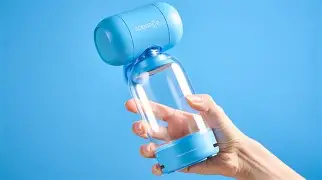
From the moment I unboxed the Sodapop, it felt solid. The packaging was minimal but protective, and the speaker itself has a compact, friendly shape that looks modern without being flashy. Out of the box I noticed the following:
- The materials: a textured silicone band around the exterior and metal mesh over the grills gave it a reassuring feel. It doesn't creak and the buttons feel well seated.
- Weight and size: small enough to carry in one hand, but heavy enough that it doesn't feel cheap. That balance matters when you plan to toss it in a bag.
- Included accessories: a short USB-C cable and a small quick-start guide. No wall adapter (which is common these days).
There's a definite focus on aesthetics — several colorways are available — but the design choices are functional too. The controls are on the top and intuitive: power, Bluetooth, volume up/down, and a play/pause button that also handles call answering.
Build Quality and Design
In my experience, build quality is one of Sodapop's strengths. The rubberized outer shell takes knocks without showing immediate scuffs, and the speaker survived being bumped off a kitchen counter (a short fall onto hardwood) with no audible issues. The buttons have tactile feedback and didn't loosen after weeks of use.
One thing I appreciated was the passive radiator design on the sides — it helps the perceived bass without adding bulk. I did notice the radiator area attracts fingerprints and dust, so it requires occasional wiping.
What bothered me slightly was the port cover for the charging and auxiliary ports. It's functional and helps with splashes, but it isn't airtight — so I'd be cautious about full immersion or very dusty environments. The marketing suggests some weather resistance; in my experience it's fine for light rain or accidental splashes but not for poolside submersion.
Sound Performance: What I Heard
Sound is, of course, the main reason to buy a speaker. After several months of listening to a variety of genres — acoustic, hip-hop, electronic, classical — here's how the Sodapop performed in practice.
Bass
The bass impressed me for a speaker this size. Tracks with strong low-end (think modern R&B and electronic) had warmth and presence. The passive radiators do their job: you feel more low-end than you'd expect. That said, if you're chasing chest-thudding subwoofer-level bass, this isn't a substitute for a true woofer. At high volumes the bass can get a touch boomy, but it rarely feels uncontrolled.
Discover deals on Audio & Headphones — updated daily.
Shop Amazon →Mids
Midrange is where this speaker shines for vocals and instruments. Acoustic guitars, piano, and most vocal performances came through clearly. I noticed excellent separation at moderate volumes — you can pick out lead vocals from background harmonies without much effort.
Treble and Detail
High frequencies are bright enough to provide sparkle, but they're not harsh. On very bright mixes I noticed slight sibilance around the 8–10 kHz region at maximum volume. During normal listening levels (60–75% volume) the treble is balanced and adds a sense of airiness without fatigue.
Volume and Room Filling
For small to medium rooms, the Sodapop fills the space comfortably. I used it in my living room (~250 sq ft) and it was more than adequate for background music and even for a small house party of ~8–10 people. Outdoors, it's audible across a small patio but loses some presence in windy conditions or at larger gatherings.
Distortion
One thing I noticed after months of frequent listening: at maximum volume the speaker begins to show compression and a little distortion on complex tracks. For most listeners this won't be an issue — I rarely play music at max — but it's worth knowing if you want clean sound at ear-splitting levels.
Battery Life and Charging
Battery life is one area where advertised numbers can be misleading, so I kept careful notes. With mixed playback at around 70% volume (which is my typical listening level), I consistently got between 10–12 hours on a full charge. If you keep it louder for parties you can expect closer to 6–8 hours.
Charging via USB-C is convenient. From near-empty to full takes roughly 2.5–3 hours with a decent charger. There's no fast-charge trick that gives you hours in 10 minutes, but the overall charging time is reasonable for daily use.
Bluetooth and Connectivity
Pairing was straightforward: press the Bluetooth button and it appears in my phone's device list within a few seconds. I paired the speaker with two phones, a laptop, and a tablet over the four months without significant dropouts. I did experience one or two brief disconnects when my phone moved far from the speaker through multiple walls, which is normal for Bluetooth.
One feature I enjoyed was multipoint pairing — you can have two devices ready to play, which made switching between my phone and a guest's device easy. The speaker also has an auxiliary input, which came in handy for a laptop that doesn't support Bluetooth well.
Hands-Free Calls and Microphone
I've used the Sodapop for conference calls and occasional hands-free calls. The microphone is usable for short conversations in a quiet room, but it does pick up room echo and background noise more than a dedicated headset. For occasional calls it's fine; for frequent call-heavy use I wouldn't rely on it as my sole device.
Discover deals on Audio & Headphones — updated daily.
See Deals →App and EQ
Sodapop offers a companion app with a basic EQ and a few presets. In my experience the app is functional but not essential: most improvements you can make with the EQ are subtle. I appreciated a bass boost preset for parties and a vocal clarity mode for podcasts, but the app sometimes felt a bit laggy on Android. The speaker remembers EQ settings once set, so you don't have to keep the app open.
Durability and Portability
After four months of use — kitchen counters, an occasional backpack trip, and a few outdoor sessions — the speaker shows minor wear (light scuffs on the rubberized band). The IP-ish protection handled a quick rain shower with no issues, but again I avoided full immersion. The compact footprint makes it easy to transport, and the battery life supports a full day of moderate use without hunting for a socket.
Daily Use: What I Liked and What I Didn't
Things I genuinely liked:
- Sound character: warm and balanced for most genres, especially vocals and acoustic music.
- Portability: easy to grab and go without worrying about fragility.
- Battery life: reliable for a whole day of casual use.
- Design: modern and pleasant to look at; fits on a shelf or counter without clashing.
Things that bothered me or could be improved:
- Maximum volume distortion: noticeable compression at full tilt on complex tracks.
- Port cover: functional but not fully sealed for heavy dust or submersion.
- App polish: basic features work, but the app could be faster and more intuitive.
- Microphone: okay for casual calls, but not great in noisy environments.
Pros & Cons
- Pros:
- Impressive midrange and surprisingly solid bass for the size
- Sturdy build and attractive, functional design
- Reliable battery life for daily use
- Easy pairing and useful multipoint support
- Cons:
- Distortion and compression at maximum volumes
- Port cover feels only splash-resistant — avoid submersion
- Companion app needs refinement
- Microphone performance is average
How the Sodapop Compares (Quick Table)
| Feature | Sodapop Bluetooth Speaker | JBL Flip (example) | Anker Soundcore (example) |
|---|---|---|---|
| Sound Signature | Warm mids, punchy bass, clear vocals | Balanced with party-oriented bass | Neutral to bass-forward, good at low volumes |
| Battery Life (real-world) | ~10–12 hours at moderate volumes | ~8–10 hours | ~12–15 hours |
| Portability | Compact, easy to carry | Compact cylinder, easy to sling | Compact, slightly larger in some models |
| Durability / Water Resistance | Light splash resistance; not for submersion | Typically IPX7 (submersible) | Varies; many models are IPX5–IPX7 |
| App & EQ | Basic app with presets | Feature-rich app on some models | Good app with multiple EQ options |
| Best Use Case | Everyday listening, small gatherings, home use | Outdoor parties, poolside (depending on model) | Value-focused users who want long battery life |
Buying Guide: Who Should Consider the Sodapop?
If you're shopping for a portable speaker, here's how I think about who should consider the Sodapop and who might want to look elsewhere.
Buy it if:
- You want a compact speaker that sounds better than its size suggests for vocals and acoustic music.
- You value build quality and a speaker that looks at home on a shelf or countertop.
- You need a reliable day-to-day speaker for small gatherings and casual outdoor use.
- You like the idea of multipoint Bluetooth so multiple people can connect quickly.
Don't buy it if:
- You need a speaker that can be cranked to extremely loud levels without any compression or distortion.
- You want an IPX7-class speaker for full submersion and rugged poolside use.
- You need studio-grade clarity for critical listening — this is a consumer-focused speaker, not a reference monitor.
- You rely heavily on the speaker's microphone for frequent conference calls in noisy places.
Tips for Getting the Best Experience
- Keep it at 70–80% volume for the best balance between loudness and clarity.
- Use the app presets to dial back slight boomy bass in small rooms if you notice muddiness.
- Pair two units (if you have the stereo pairing feature) for a wider soundstage in living rooms or outdoor areas.
- Avoid leaving the port cover open in dusty or wet conditions; it helps protect the charging port when closed.
Final Thoughts and Conclusion
After using the Sodapop Bluetooth speaker for several months, I can confidently say it delivers a lot of value for everyday listeners. I was pleasantly surprised by how full the mids and bass felt given the speaker's compact size — vocals and acoustic tracks sounded particularly good. Build quality and design are strong points, and the battery life comfortably handled daily use. Multipoint Bluetooth and a usable companion app add convenience.
That said, it isn't perfect. The speaker shows compression and a touch of distortion at absolute maximum volume, the port cover isn't fully sealed for heavy-duty water resistance, and the microphone is average. These are important caveats depending on your intended use: if you want a poolside submersible or festival-level volume, look elsewhere. If you want a stylish, portable speaker that sounds excellent for personal listening and small gatherings, the Sodapop is worth serious consideration.
Personally, I kept mine. It's become my go-to kitchen and small-party speaker because it hits the sweet spot between sound quality, portability, and design. If you want a dependable, pleasant-sounding speaker that works well in everyday situations, the Sodapop justified the hype for me — with the usual caveats about max volume and ruggedness.