Which is Better Value? Fujifilm X E5 vs Nisi V7 Filter Kit Compared
In the world of photography, value is often a subjective metric that depends heavily on what a photographer intends to achieve. For some, value is found in the physical hardware that captures the light—the sensor, the processor, and the ergonomics of a camera body. For others, value lies in the tools that manipulate that light before it ever hits the sensor. This brings us to a unique comparison between two very different but equally essential pieces of gear: the Fujifilm X-E5 mirrorless camera and the NiSi V7 Filter Kit. While one is a primary capture device and the other is a high-end accessory, both represent significant investments for enthusiast photographers. Understanding which offers better "value" requires looking past the price tags and examining how each affects the creative process and the final image output.
The Fujifilm X-E5 serves as the latest iteration in a beloved line of rangefinder-style cameras that emphasize portability and tactile control. It represents the "core" of a kit. Conversely, the NiSi V7 Filter Kit is a professional-grade system designed to solve specific environmental challenges, particularly in landscape and architectural photography. This article delves into the technical specifications, real-world utility, and long-term worth of both items to help photographers decide where their next budget allocation should go.
Analysis of the Fujifilm X-E5
The Fujifilm X-E series has always occupied a specific niche in the X-series lineup. It is designed for those who find the X-T series too bulky and the X100 series too restrictive due to its fixed lens. The X-E5 continues this legacy by offering the power of Fujifilm’s latest sensor and processor technology in a body that can practically disappear into a jacket pocket. For many photographers, the value of the X-E5 is found in its "carry-ability." A camera that is with you is always more valuable than a more powerful one left at home.
Equipped with a high-resolution X-Trans CMOS sensor, the X-E5 delivers the signature Fujifilm color science that many artists swear by. The inclusion of the latest film simulations gives photographers a head start on post-processing, often allowing for "straight out of camera" JPEGs that require little to no editing. This efficiency is a tangible form of value for the modern creator who needs to turn around content quickly for social media or client previews. Furthermore, the upgraded autofocus system, featuring sophisticated subject tracking for humans, animals, and vehicles, ensures that the X-E5 is not just a "stills" camera but a competent tool for street photography and casual videography.
However, the compact nature of the X-E5 brings certain trade-offs. The lack of a deep handgrip can make it fatiguing to use with larger telephoto lenses, and the electronic viewfinder, while clear, is smaller than those found on the flagship models. Buyers are paying for the miniaturization of technology, which is a specific type of engineering value. In real-world use cases, such as travel photography or daily documentation, the X-E5 excels by being unobtrusive, allowing the photographer to blend into the environment and capture candid moments that a larger DSLR or bulky mirrorless setup might spoil.
Pros and Cons of the Fujifilm X-E5
- Pro: Extremely compact and lightweight design, making it the ideal travel companion for minimalist photographers.
- Pro: Access to the vast X-mount lens ecosystem, providing flexibility from ultra-wide to telephoto focal lengths.
- Pro: Exceptional film simulations and JPEG processing that save significant time in the editing workflow.
- Pro: Improved internal processing power leads to faster burst rates and more reliable eye/face detection autofocus.
- Con: Limited physical real estate for buttons and dials, which may frustrate those used to more tactile control surfaces.
- Con: Lack of in-body image stabilization (IBIS) in such a small frame can be a hurdle for handheld low-light shooting.
- Con: Battery life remains modest compared to larger professional bodies, necessitating the purchase of spares.
Analysis of the NiSi V7 Filter Kit
Switching gears to the NiSi V7 Filter Kit, we move from the world of digital processing to the world of optical physics. Many beginners assume that filters are a relic of the film era, believing that software like Lightroom or Photoshop can replicate the effects of a Neutral Density (ND) or Graduated ND filter. Experienced landscape photographers know this is a misconception. A filter kit like the NiSi V7 provides value by capturing data that a sensor simply cannot record on its own—such as the texture of water over a long exposure during high noon or the balanced exposure of a bright sky and a dark foreground in a single frame.
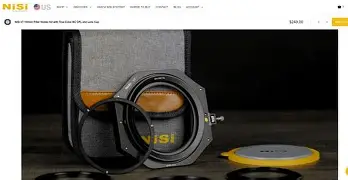
The NiSi V7 system is built around a precision-engineered 100mm filter holder that includes a unique integrated True Color Circular Polarizer (CPL). The value here is found in the "True Color" technology, which eliminates the yellow or blue casts often found in cheaper polarizers. For a landscape artist, the ability to remove reflections and enhance natural saturation without shifting the white balance of the entire scene is worth the entry price alone. The kit typically includes various ND filters (like the 3-stop, 6-stop, and 10-stop) and a medium graduated filter, all made from high-quality optical glass with Nano coating.
Using the NiSi V7 kit shifts the "value" from the camera body to the lens front. It allows a photographer to keep their shutter open for minutes at a time to turn crashing waves into a surreal mist, or to keep detail in a sunset sky that would otherwise be "blown out" to pure white. While the X-E5 provides the "bits," the NiSi V7 provides the "atoms." It is a long-term investment; while camera bodies like the X-E5 might be replaced every three to four years as sensors improve, a high-quality glass filter kit can last a decade or more, fitting onto any lens with the correct adapter ring. This longevity is a critical component of the value proposition.
Find top-rated Cameras & Photography products at great prices.
Browse Now →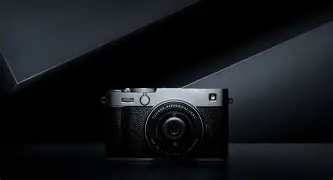
Pros and Cons of the NiSi V7 Filter Kit
- Pro: Professional-grade optical glass ensures no loss of sharpness or resolution, even on high-megapixel sensors.
- Pro: The integrated CPL adjustment dial allows for easy rotation of the polarizer without disturbing the square filters.
- Pro: Compatible with almost any lens via adapter rings, making it a "future-proof" investment that stays with you across camera systems.
- Pro: Essential for long-exposure photography, providing a level of "in-camera" polish that software cannot perfectly mimic.
- Con: Requires a disciplined setup process, which can be slow and cumbersome in fast-changing lighting conditions.
- Con: Square filters are fragile; a single drop on a rock can result in an expensive replacement.
- Con: High initial cost for an accessory that does not actually "take" pictures on its own.
Comparative Analysis: Hardware vs. Optics
Comparing these two items is essentially a debate between the "Engine" (the X-E5) and the "Transmission" (the NiSi V7). If you have a powerful engine but no way to transfer that power to the ground effectively, you aren't going anywhere. Similarly, the world's best sensor can be limited by lighting conditions it wasn't designed to handle without help. The table below outlines how these two products compare across factors that buyers typically care about, such as longevity, impact on image quality, and ease of use.
| Feature/Factor | Fujifilm X-E5 | NiSi V7 Filter Kit |
|---|---|---|
| Primary Function | Image Capture & Processing | Light Manipulation & Exposure Control |
| Portability | Excellent (Pocketable) | Moderate (Requires dedicated pouch) |
| Durability | High (Electronic/Mechanical) | Fragile (Optical Glass) |
| Lifespan | 3–5 years (Technology cycles) | 10+ years (Glass doesn't expire) |
| Learning Curve | High (Menus, AF settings) | Moderate (Physical installation) |
| Workflow Impact | Speeds up post-processing | Slows down field acquisition |
When we look at the data, the Fujifilm X-E5 offers immediate gratification and versatility. It can shoot a wedding, a basketball game, or a street scene. The NiSi V7 kit is a specialist tool. Its value is concentrated in a narrower field but provides a deeper impact within that field. For a buyer who already owns a decent camera body, the NiSi kit might actually offer "better value" because it unlocks an entire genre of photography (long exposure) that was previously inaccessible. For a buyer looking to upgrade from a smartphone or an older DSLR, the X-E5 is the foundation they cannot do without.
Real-World Use Cases
To truly understand the value, we must look at how these tools perform in the field. Imagine a photographer standing on a coastline at dawn. The sky is glowing with orange and pink, but the foreground rocks are in deep shadow. With the Fujifilm X-E5 alone, the photographer must choose: expose for the sky and let the rocks fall into blackness, or expose for the rocks and let the sky turn white. They could use "High Dynamic Range" (HDR) bracketing, but that requires merging files later and can look artificial. Now, introduce the NiSi V7 kit with a 3-stop Graduated ND filter. Suddenly, the sky is darkened to match the foreground. The internal sensor of the X-E5 is now receiving a balanced image, allowing the photographer to capture the scene exactly as it looks to the human eye in a single raw file. In this scenario, the NiSi kit has "doubled" the effective value of the camera's sensor.
Consider a second scenario: a busy city street in Tokyo. The photographer wants to capture the neon lights and the movement of the crowd. Here, the NiSi V7 kit is a hindrance. It is too slow to set up, and a large 100mm holder attracts unwanted attention. The Fujifilm X-E5, however, is in its element. Its silent shutter and small profile allow the photographer to move quickly. The film simulations like "Classic Negative" add a cinematic mood that emphasizes the street atmosphere. In this case, the value of the camera's internal technology far outweighs any external filters.
Buyers typically care about three things: results, reliability, and cost-per-use. The X-E5 has a high cost-per-use because it is used for almost every photo. The NiSi V7 has a lower frequency of use but a higher "perceived result" for specific shots. Landscape enthusiasts often find that while the camera body is the "necessary" cost, the filter kit is the "improvement" cost that takes their work from amateur to professional.
Buying Guide: Which Should You Prioritize?
If you are deciding between these two for your next purchase, the choice depends on your current inventory and your artistic goals. The following guidelines should help simplify the decision-making process based on common photographer profiles.
The New Entrant or Upgrader
If you are moving up from a smartphone or a camera that is more than six years old, the Fujifilm X-E5 is the clear choice. The leap in sensor technology, autofocus speed, and video capabilities will provide a massive boost to your overall capability. A filter kit is useless without a modern sensor to record the light it filters. Focus on the "Engine" first. The X-E5's versatility ensures it will be used in 90% of your shooting scenarios, representing excellent daily value.
The Landscape Specialist
If you already own a mirrorless camera (even a slightly older one) and your passion lies in scenery, mountains, and water, you should prioritize the NiSi V7 Filter Kit. Adding a new camera body like the X-E5 might give you more megapixels, but it won't help you smooth out water or balance a bright horizon. The NiSi V7 is a transformative purchase that changes the *way* your photos look, rather than just how sharp they are. Furthermore, its ability to bridge cameras means that when you eventually *do* buy an X-E5 or a future X-E6, your filters will still be there, ready to work.
Shop the latest Cameras & Photography picks on Amazon.
View Offers →The Travel and Street Photographer
For the traveler, the X-E5 is almost always the winner. Portability is the king of travel value. Carrying a filter pouch, a holder, and glass plates is often too much for a light-and-fast trip. The X-E5’s built-in film simulations and high-ISO performance provide enough tools to handle most situations without the need for physical filters. You can often mimic a polarizing effect or a slight graduation in post-processing enough to satisfy the needs of casual travel documentation.
Long-Term Value and Sustainability
One aspect often overlooked in "value" comparisons is the resale value and depreciation. Digital electronics like the Fujifilm X-E5 follow a predictable curve of depreciation. As soon as the "X-E6" is announced, the market value of the current model drops by 30-40%. It is a high-performance tool with a finite "peak" lifespan. Digital sensors also degrade slightly over hundreds of thousands of actuations, and shutters eventually wear out.
The NiSi V7 Filter Kit is different. Because it is a mechanical and optical system with no electronics, its value remains incredibly stable. High-quality glass filters do not go out of style. A 10-stop ND filter from 2024 will do the exact same thing in 2034. As long as you don't break the glass, the kit retains a significant portion of its value for years. For the budget-conscious photographer, investing in glass is often seen as a "safer" place to park money than in rapidly evolving camera bodies. This "legacy value" makes the NiSi kit a strong contender for those who believe in buying gear once and using it for a decade.
Conclusion
Comparing the Fujifilm X-E5 and the NiSi V7 Filter Kit reveals that "value" is split into two categories: Versatility and Specialization. The Fujifilm X-E5 is a masterclass in versatile value. It is a powerful, portable, and modern imaging computer that can handle almost any task you throw at it. It is the heart of a photographer's kit, and for most people, it will be the most impactful purchase they make. It offers value through its incredible ease of use and the sheer joy of its tactile shooting experience.
The NiSi V7 Filter Kit, meanwhile, offers the value of professional refinement. It is the tool that separates a snapshot of a landscape from a piece of fine art. While it is a specialized system, its longevity and impact on specific high-value shots make it an essential investment for anyone serious about the craft of outdoor photography. It doesn't replace the camera; it amplifies it. For the photographer who wants to see their work printed large on a gallery wall, the filtered light of the NiSi V7 provides a quality that no sensor can achieve through software alone.
Ultimately, if your goal is to have a camera that goes everywhere and captures everything with style, the Fujifilm X-E5 is the better value. If your goal is to master the elements and create breathtaking, long-exposure art that stands the test of time, the NiSi V7 Filter Kit is the smarter addition to your bag. Both products represent the pinnacle of their respective categories, and choosing between them is simply a matter of deciding which part of your creative vision needs to be unlocked next.